Replacing or adding baseboards is one of those projects that looks straightforward until you’re standing in the lumber aisle doing math on your phone. Prices vary more than most people expect, and the timeline depends heavily on what’s already on the walls. Here’s what the job actually costs in San Diego and what drives every dollar of it.
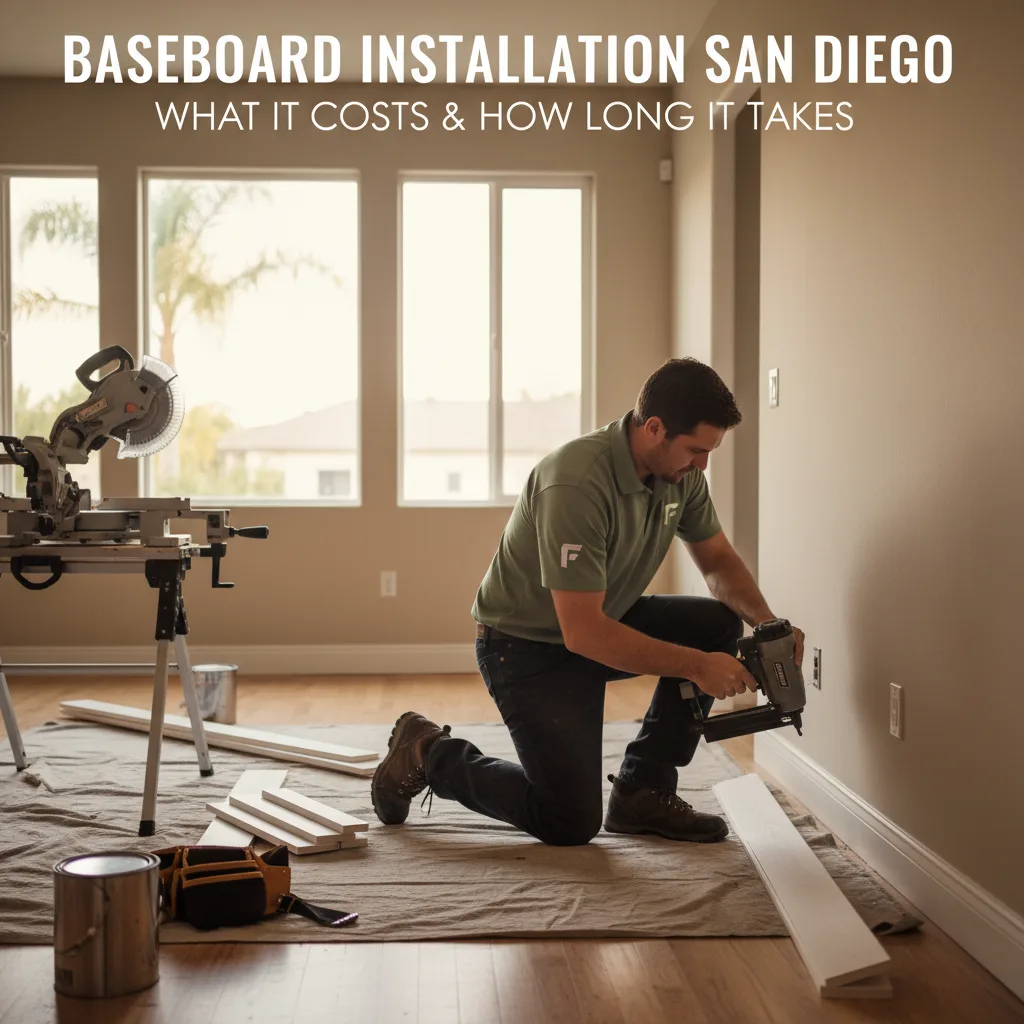
Baseboard cost per linear foot in San Diego
Material-only, you’re looking at $5–$9 per linear foot for standard 3¼-inch boards bought at a local home improvement store. That range covers the board itself plus a modest allowance for waste, nails, and caulk.
Installed by a handyman, the range shifts to $8–$14 per linear foot, depending on profile complexity, wall condition, and whether old trim needs to come off first. That spread is consistent with what our handyman cost guide for San Diego shows across similar carpentry tasks.
To put those numbers in context, here are two common job sizes:
- Single bedroom or living room — roughly 60 linear feet. Material only: $300–$540. Installed: $480–$840.
- Whole 1,500 sq ft house — roughly 280 linear feet. Material only: $1,400–$2,520. Installed: $2,240–$3,920.
Labor typically runs $3–$6 per linear foot on top of materials. That gap narrows when a job is simple and walls are straight. It widens fast when there are a lot of inside corners, doorways to work around, or existing trim to remove.
Minimum-charge jobs — a single short hallway, for example — usually have a floor of $150–$200 regardless of linear footage, simply because of drive time and setup.
MDF vs primed pine vs solid wood — what’s worth the money
The material you choose affects both cost and longevity, and in San Diego’s climate the stakes are lower than in humid regions. Still, each option has a real use case.
MDF (medium-density fiberboard) is the most common choice for painted interiors. It’s stable, it takes paint well, and it runs $0.80–$1.40 per linear foot for standard profiles at most local suppliers. The downside: it dents more easily than wood and doesn’t tolerate moisture well, so avoid it in bathrooms or laundry rooms.
Primed pine costs slightly more — roughly $1.10–$1.80 per linear foot — but it holds nails better, can be sanded and repainted multiple times, and handles the occasional scrub without delaminating. For most San Diego homes, primed pine is the sweet spot between cost and durability.
Solid wood (poplar, oak, or knotty alder) makes sense when you want a stain-grade finish or you’re matching existing wood trim in an older Craftsman or Spanish Colonial. Expect $2.50–$5.00 per linear foot just for the board. The labor rate goes up too, because stain-grade work requires tighter fits and more careful sanding.
Paint-grade jobs that will get touched up over time? MDF or primed pine. Stain-grade or high-traffic areas? Spend the extra money on solid wood. Our carpentry and trim work service covers all three material types if you want a specific recommendation for your rooms.
Removal, prep, and the part that takes the longest
On a new construction or renovation where there’s no existing baseboard, installation moves quickly. A handyman can typically install 200–250 linear feet of straightforward trim in a single day.
The timeline stretches when there’s removal involved. Prying off old baseboards without damaging drywall is slow work, especially in homes where the trim was painted over multiple times — which is common in older San Diego neighborhoods like North Park, Hillcrest, and Kensington. Expect to add 20–40 minutes per room just for careful removal.
Wall prep adds more time. Baseboards hide the gap between drywall and floor, but they don’t fix wavy or damaged walls. If the wall surface is uneven, the installer has to scribe or shim the board before nailing it — otherwise you get a gap that caulk can’t fully cover. Significant wall damage should be addressed before trim goes in; see our drywall repair service if that’s the situation in your home.
The actual nailing goes fast. A finish nailer seats each board in seconds. The slow part is measuring, cutting, and fitting — especially at inside corners, which need to be coped or mitered precisely.
Stairs, curves, and rounded corners
Standard rooms with 90-degree corners are the easy version of this job. A few situations add real cost and time.
Stairs require compound angle cuts at every riser and landing. A single staircase can add two to four hours of labor on its own.
Curved walls — common in Spanish-style homes throughout San Diego — require either flexible trim (a specialty product) or a series of small straight segments cut at shallow angles to approximate the curve. Both approaches take longer than straight runs.
Rounded drywall corners (bullnose bead) need a different coping technique than square corners. If your home was built or renovated in the 1990s or 2000s, there’s a good chance you have these throughout. They’re manageable but slower.
If you’re budgeting for a job that includes any of these conditions, add 15–25% to the standard labor estimate.
Caulking and paint touch-up after install
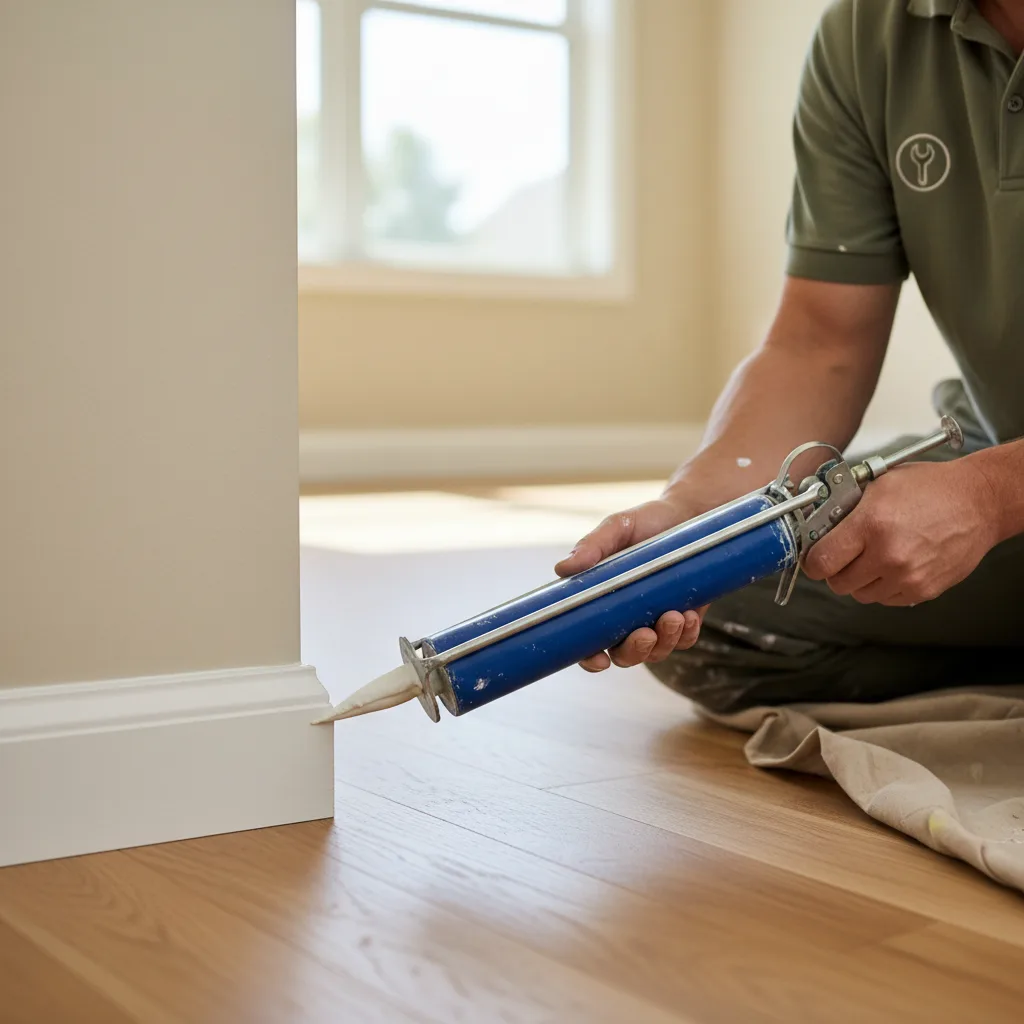
Baseboard installation isn’t truly done when the last nail goes in. Every joint, inside corner, and gap between trim and wall needs to be caulked before paint. Skipping this step is the most common reason DIY baseboard jobs look unfinished — small gaps read as big imperfections once the room is lit.
Paintable latex caulk is the right product for interior trim work. It dries in an hour, sands lightly if needed, and takes paint without cracking. A thorough caulk job on a standard room takes 30–60 minutes on top of installation.
After caulking comes paint. Primed MDF and primed pine are ready for a finish coat directly — no additional primer needed. If the baseboards are being painted to match existing walls, the color match matters more than the number of coats. Our interior painting service can handle touch-up or full-room paint if you’d rather have one crew handle the whole finish.
Budget an extra $1–$2 per linear foot if you want caulking and paint included in the handyman quote. Some contractors separate it; make sure you know what’s in the price before work starts.
DIY vs handyman: where the math actually breaks even
The honest answer is that baseboards are one of the more approachable DIY trim projects. If you own a miter saw, have a few weekends free, and are comfortable with a finish nailer, material-only cost ($5–$9 per linear foot) is achievable.
The math shifts when you factor in tool rental or purchase. A compound miter saw runs $50–$80 per day to rent, and a finish nailer kit (nailer plus compressor) adds another $40–$60. On a small job — say, one room at 60 linear feet — tool costs can eat the entire labor savings.
On a whole-house job at 280 linear feet, the savings get real. But so does the time commitment. A skilled handyman completes that job in one to two days. A DIYer doing it on weekends might stretch it to three or four, which has its own cost.
The break-even point for most San Diego homeowners is around 100–120 linear feet. Below that, hiring out is usually worth it. Above that, capable DIYers start saving real money — assuming no complicated conditions like stairs or curved walls.
If you’re unsure where your project falls, the DIY vs. professional repair cost data for San Diego breaks down the math across several common job types.
When to call us
If your project involves removal of old trim, more than one room, or any of the complications covered above — stairs, curved walls, damaged drywall — it’s worth handing off to a pro. The material costs are the same either way, and a clean install that’s properly caulked and painted will outlast a rushed weekend job by years. Call us at (858) 808-6055 for same-day handyman service across San Diego County.